What If Disasters Guide: Best Tips for Surviving Every Disaster and Finding Safe Spots
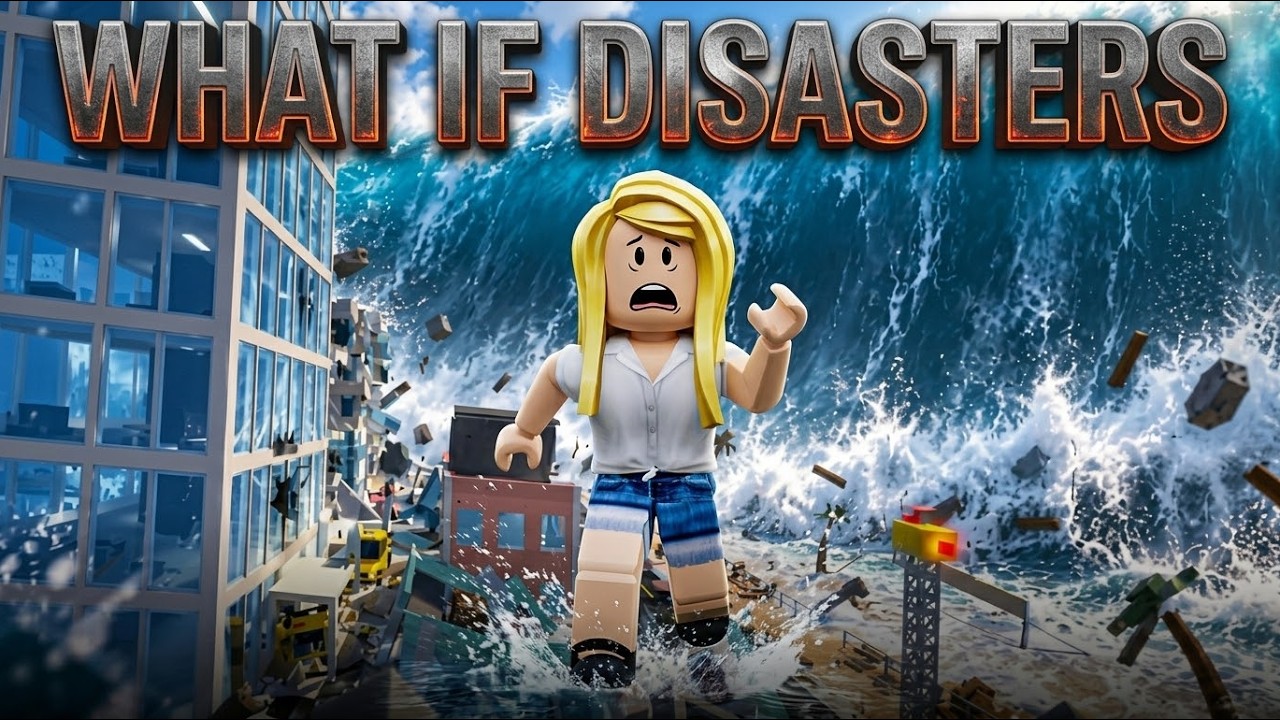
What If Disasters is a Roblox survival game built around a simple but unpredictable question: what if something completely unexpected happened? Each round places players on a map and introduces a different disaster, forcing everyone to explore the environment, react quickly, and find a way to stay alive.
The game stands out because the threat changes from round to round. Scenarios can include extreme events such as a falling Moon, a disappearing Sun, a massive tsunami, or other unusual disasters. The Roblox listing currently describes the experience as having multiple disasters and maps, while recent updates have continued expanding and changing the game.
Survival is not simply about finding one hiding place and staying there forever. Different disasters create different hazards, so players need to understand the map, identify useful locations, watch how the danger develops, and react accordingly. This guide covers ten practical strategies to help you survive more rounds and make better decisions in What If Disasters.
1. Learn the Basic Round Structure
The first thing new players should understand is how a typical round works. Players begin in a lobby before being sent into a map for the next disaster. There is a short preparation period that gives players an opportunity to understand their surroundings before the main danger begins.
Once the disaster starts, the objective is straightforward: survive until the round finishes. However, the correct strategy depends heavily on what disaster appears. A location that seems safe during one round may become extremely dangerous during another.
Understanding this structure helps you avoid wasting the preparation period. Instead of standing still and waiting for the disaster to begin, use those seconds to examine the environment and identify potential escape routes.
Use the Preparation Time Wisely
As soon as you enter a map, look for important landmarks, elevated areas, enclosed structures, and open spaces. You do not need to memorize the entire map immediately.
Focus on finding several possible survival locations. Having alternatives is much safer than depending on one spot.
2. Explore the Map Before the Disaster Begins
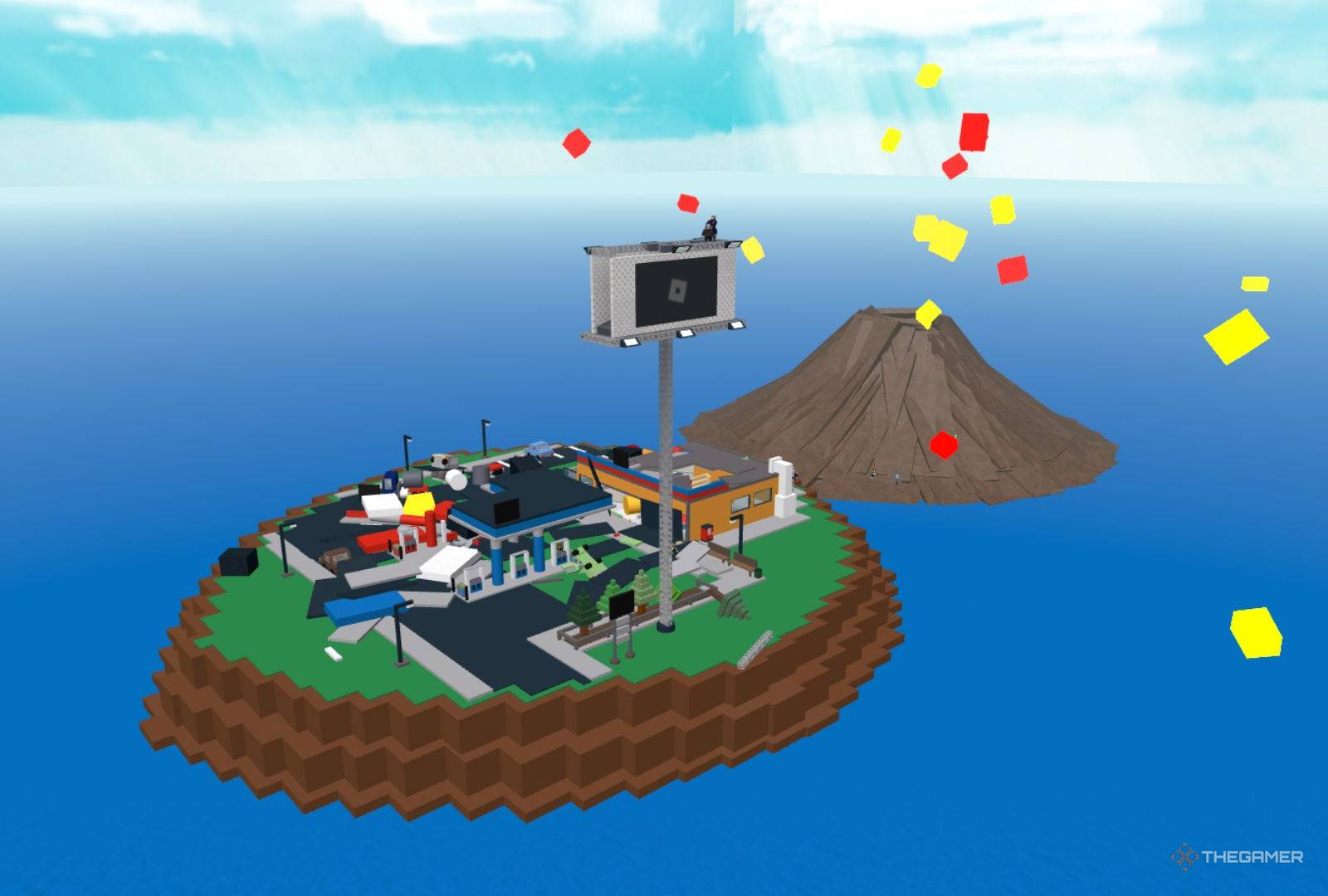
Map knowledge is one of the strongest advantages you can develop in What If Disasters. Every environment can contain different structures and terrain, and understanding where you can move gives you more options when the disaster starts.
During the opening moments of a round, explore the immediate area instead of automatically following other players. Look for buildings, rooftops, hills, underground spaces, open areas, and other environmental features that could become useful depending on the disaster.
You should also identify routes between different parts of the map. If your initial position becomes dangerous, knowing where to run can save valuable time.
Memorize Landmarks
You do not need to remember every detail. Focus on recognizable locations that can help you orient yourself quickly.
A large building, unusual structure, road intersection, tower, or distinctive landscape feature can serve as a reference point. Once you recognize these landmarks, navigating under pressure becomes easier.
3. Do Not Copy Other Players Blindly
Following other players can be useful, especially when you are unfamiliar with a map. However, copying the largest group without understanding why they are moving can be dangerous.
Other players may be reacting to information you have not noticed, or they may simply be guessing. If everyone runs toward the same location, that area may not necessarily be the safest option.
Instead, observe what is happening and make your own decision. Watch the environment, identify the direction of the danger, and consider whether the group is actually moving toward a sensible shelter.
Use Other Players as Information
Experienced players can provide useful clues through their movement. If many players suddenly leave an area, pay attention and investigate why.
However, treat their behavior as one source of information rather than an automatic command. Combining their reactions with your own observation will produce better decisions.
4. React to the Disaster Instead of Using One Fixed Strategy
The biggest mistake in a disaster survival game is assuming the same strategy works every time. What If Disasters intentionally changes the scenario from round to round, so flexibility is essential.
A water-based disaster may require higher ground, while another scenario could make open areas dangerous. A disaster involving the sky may require you to consider buildings or other forms of cover rather than simply running away.
Before choosing a hiding place, think about how the specific disaster is likely to affect the environment. Ask yourself where the danger is coming from and whether your current position provides meaningful protection.
Identify the Direction of the Threat
When the disaster becomes visible, immediately determine its general direction and movement. This can help you decide whether to stay where you are or relocate.
Do not wait until the danger is already next to you. The earlier you recognize the threat, the more options you have.
5. Find Safe Locations Before You Need Them
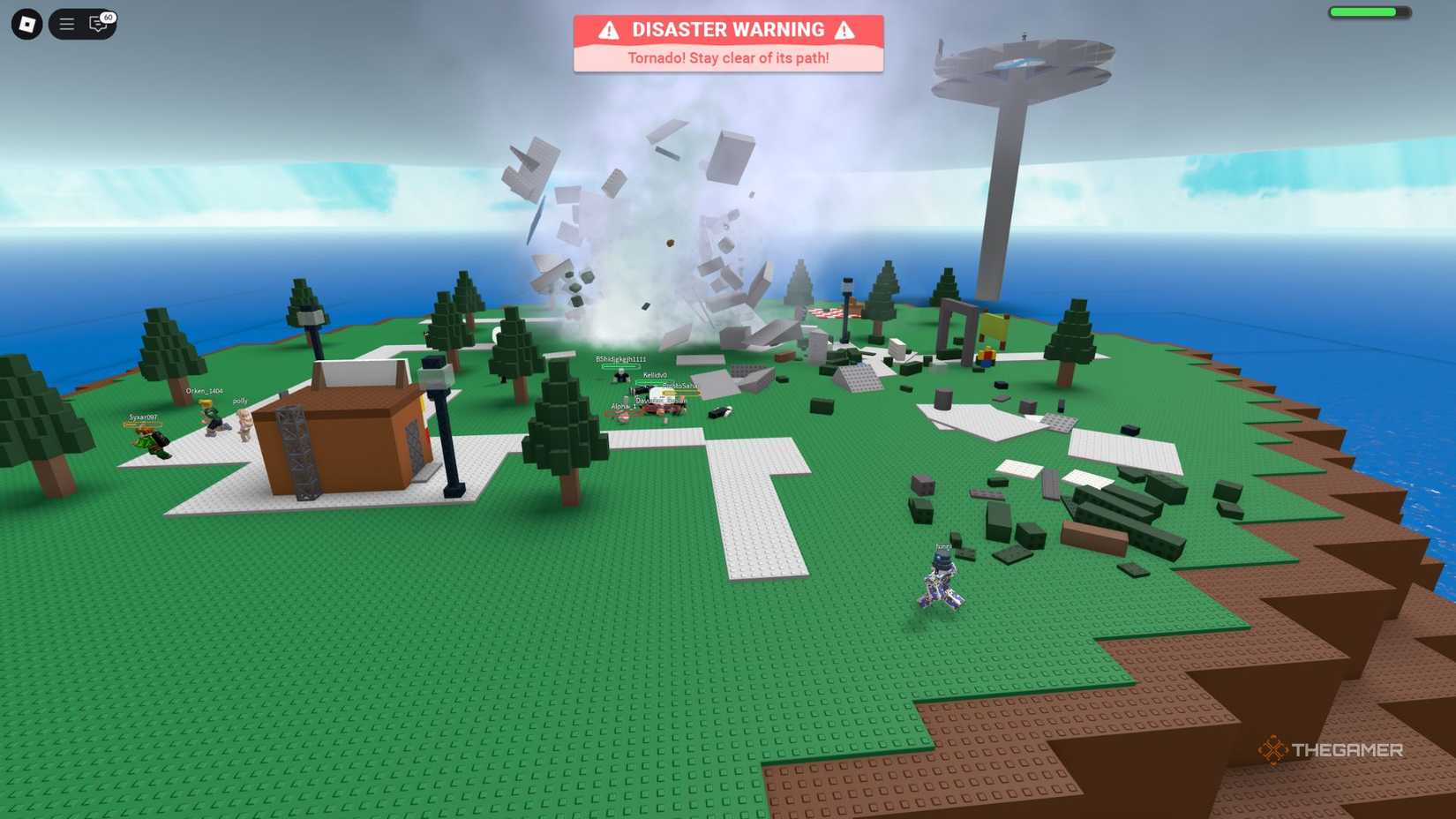
A strong survival strategy is to locate potential safe areas before the disaster becomes dangerous. Searching for shelter while everything is already happening gives you less time to make a good decision.
Look for locations that provide useful protection while still allowing you to escape if the situation changes. A completely enclosed area may seem safe initially but could become a trap if the disaster reaches it.
Having multiple possible locations is even better. If your first choice becomes unsafe, immediately move toward your second option rather than wasting time trying to make the original position work.
Think About Escape Routes
A safe location should not only protect you from the current threat. Consider how easily you can leave it.
Avoid placing yourself in an area with no alternative route unless you are certain that the location is appropriate for the disaster. Mobility can be just as important as protection.
6. Use High Ground When Water Is the Main Threat
Water-based disasters can quickly change the safest parts of a map. When the threat involves rising or rapidly moving water, elevation becomes one of the first things you should consider.
Move toward higher terrain when appropriate and avoid remaining in low-lying areas without a clear escape route. Buildings and elevated structures may also provide useful protection depending on how the specific disaster behaves.
However, do not assume that the highest point is automatically safe. Some disasters can create hazards that make exposed rooftops or elevated positions dangerous.
Keep Moving if the Water Keeps Rising
If your current location is becoming unsafe, do not wait until the danger reaches you. Move toward another elevated area while you still have time.
Pay attention to the surrounding terrain and maintain an escape route. A small amount of early movement can make the difference between having several options and having none.
7. Stay Calm When the Disaster Starts
The beginning of a disaster can create panic, especially when players suddenly start running in different directions. Panic often causes players to make unnecessary movement or choose a location without considering the actual threat.
Instead, take a moment to understand what is happening. You do not need to freeze in place, but you should avoid running randomly simply because everyone else is moving.
Use the first few seconds to identify the disaster, determine the main danger, and decide whether your current position is appropriate.
Avoid Unnecessary Movement
Once you find a genuinely safe position, there may be no reason to keep moving. Constantly changing locations can expose you to hazards that you were already avoiding.
Movement should have a purpose. Relocate when the danger changes, when your current shelter becomes unsafe, or when a clearly better option becomes available.

8. Learn From Every Failed Attempt
Not every round will end in a victory. Some disasters may catch you off guard, especially when you are still learning how the game works.
Instead of treating each death as wasted time, use it as information. Think about what caused the failure. Did you choose the wrong location? Did you move too late? Did you misunderstand the disaster? Did another route provide better protection?
The answer can improve your next attempt immediately.
Remember What Went Wrong
If a particular area turned out to be dangerous, remember that information for future rounds. Likewise, if a specific structure provided excellent protection, keep it in mind when the same map appears again.
Survival becomes easier as you build a mental database of maps, hazards, and useful locations.
9. Complete Rounds and Work Toward Progression
Surviving rounds is not only about winning the individual disaster. Survival contributes to longer-term progression, including XP, Credits, and badges. Recent game information indicates that surviving disasters and completing missions can contribute to rewards and progression.
Credits can be used through the game's progression and shop systems, while badges provide additional goals for players who want to go beyond simply surviving individual rounds.
This gives you a reason to continue playing even after you understand the basic survival mechanics. You can gradually work toward surviving more disasters and completing additional achievements.
Set Small Goals
Instead of focusing only on winning every round, create manageable goals. Try surviving your first disaster, then work toward longer survival streaks or additional badges.
The game currently includes badges tied to survival milestones, including surviving multiple disasters.
10. Develop a Flexible Survival Strategy
The most effective players do not rely on a single trick. They understand the map, observe the disaster, evaluate their surroundings, and adapt their decisions as the situation changes.
Start every round by learning the environment. When the disaster is revealed, identify the main threat and determine whether your current position is appropriate. If it is not, move early rather than waiting for the danger to become unavoidable.
Over time, you will become better at recognizing patterns. You will know which areas are useful, which routes provide escapes, and when it is better to stay still rather than continue moving.
Combine Knowledge With Quick Decisions
Map knowledge gives you options, but knowing when to use those options is just as important. A perfect hiding location is useless if you reach it too late.
Try to make decisions early, but do not panic. The goal is to balance speed with observation so that every movement has a reason behind it.
Conclusion
What If Disasters combines unpredictable scenarios with simple but demanding survival gameplay. Each round asks players to understand a new threat, explore the environment, find protection, and stay alive until the danger passes.
The best way to improve is to learn the maps while remaining flexible. Explore before disasters begin, identify multiple safe locations, watch how other players react, and adapt your strategy to the specific threat. Avoid relying on one hiding place or blindly following a crowd.
Most importantly, learn from every round. A failed attempt can teach you where the danger comes from, while a successful survival can reveal which decisions worked. With better map awareness, faster reactions, and a flexible approach, you can survive more disasters and steadily work toward the game's longer-term badges and progression.